Notice: Function _load_textdomain_just_in_time was called incorrectly. Translation loading for the acf domain was triggered too early. This is usually an indicator for some code in the plugin or theme running too early. Translations should be loaded at the init action or later. Please see Debugging in WordPress for more information. (This message was added in version 6.7.0.) in /home/artforall/preprod.artforall.fr/releases/8/wp-includes/functions.php on line 6260

Warning: Cannot modify header information - headers already sent by (output started at /home/artforall/preprod.artforall.fr/releases/8/wp-includes/functions.php:6260) in /home/artforall/preprod.artforall.fr/releases/8/wp-content/plugins/wp-super-cache/wp-cache-phase2.php on line 1563

Notice: Function _load_textdomain_just_in_time was called incorrectly. Translation loading for the woocommerce domain was triggered too early. This is usually an indicator for some code in the plugin or theme running too early. Translations should be loaded at the init action or later. Please see Debugging in WordPress for more information. (This message was added in version 6.7.0.) in /home/artforall/preprod.artforall.fr/releases/8/wp-includes/functions.php on line 6260

Notice: Function _load_textdomain_just_in_time was called incorrectly. Translation loading for the ti-woocommerce-wishlist domain was triggered too early. This is usually an indicator for some code in the plugin or theme running too early. Translations should be loaded at the init action or later. Please see Debugging in WordPress for more information. (This message was added in version 6.7.0.) in /home/artforall/preprod.artforall.fr/releases/8/wp-includes/functions.php on line 6260

Notice: Function _load_textdomain_just_in_time was called incorrectly. Translation loading for the qwery domain was triggered too early. This is usually an indicator for some code in the plugin or theme running too early. Translations should be loaded at the init action or later. Please see Debugging in WordPress for more information. (This message was added in version 6.7.0.) in /home/artforall/preprod.artforall.fr/releases/8/wp-includes/functions.php on line 6260

Warning: Cannot modify header information - headers already sent by (output started at /home/artforall/preprod.artforall.fr/releases/8/wp-includes/functions.php:6260) in /home/artforall/preprod.artforall.fr/releases/8/wp-includes/feed-rss2.php on line 8
geoadmin – Art For All https://preprod.artforall.fr/en/ Une œuvre d’Art accessible à tous Thu, 14 Oct 2021 19:48:37 +0000 en-US hourly 1 https://wordpress.org/?v=7.1 https://preprod.artforall.fr/wp-content/uploads/2021/05/cropped-afa_picto_work-120x120.png geoadmin – Art For All https://preprod.artforall.fr/en/ 32 32 Bernard Quentin at Centre Pompidou-Metz https://preprod.artforall.fr/en/bernard-quentin-at-centre-pompidou-metz/ https://preprod.artforall.fr/en/bernard-quentin-at-centre-pompidou-metz/#respond Fri, 04 Jun 2021 09:18:56 +0000 https://artforall.fr/bernard-quentin-at-centre-pompidou-metz/

Galerie Loft is pleased to announce that the “Molécul’air” armchair, the “Croissant” armchair and the monumental sculpture “ART” by Bernard Quentin have been selected by the Center Pompidou-Metz to be part of the AERODREAM exhibition !

Aerodream. Architecture, design and inflatables, 1950-2020

If the dream of flying has accompanied man since Icarus, it is really with the idea of an inflatable sheath, taking the place of the deployment of wings, that it became effective starting from the 18th century. The history of inflatables, parallel with that of aeronautics, is that of the development of a more organic relationship to the aerial. The sheath is a metaphor for the skin, a protection for the body, enabling an immediate proximity with the air. The inflatable carries within itself the idea of the pneuma of breathing; an immediate relationship to the living, to the event, to life.

The exhibition reveals this human dimension of the «pneumatic», from the first industrial and military exploitations (airships, weather balloons, floating assemblies, inflatable decoys…) to the experiences developed by numerous artists designers and architects.

In the middle of the 20th century the appearance of new materials (rubber and derivatives, plastics, woven fishnet…) multiplied the possible uses and practical applications of inflatable structures.

In keeping with the “achieved utopia” by Richard Buckminster Fuller, numerous architects gave inflatables an architectonic credibility, such as Victor Lundy, Walter Bird, Frei Otto, Gernot Minke, Cedric Price and Arthur Quarmby. In May 1967, a symposium on the subject created a stir in Stuttgart and would constitute the reference for the collectives in search of mobile and modular architecture like Archigram, Ant Farm, Eventstructure Research Group, thus for artist the world over such as Graham Stevens or Panamarenko, architects (Jean Aubert, Jean-Paul Jungmann, Antoine Stinco, Hans Walter Muller, Johanne et Gernot Nalbach or Günther Domenig and Eilfried Huth). But it was through a a few mythical exhibitions that the inflatable would find an international echo and a public image, notably the exhibition at the Musée d’art moderne of the City of Paris in 1968, and the pavilions of the Universal Exhibition in Osaka in 1970 (of which those of Yutaka Murata) and finally Documenta V in 1972 in Kassel where artists and architects such as Christo, Hans Hollein, Haus-Rucker-Co, Coop Himmelb(l)au take over public spaces with their works.

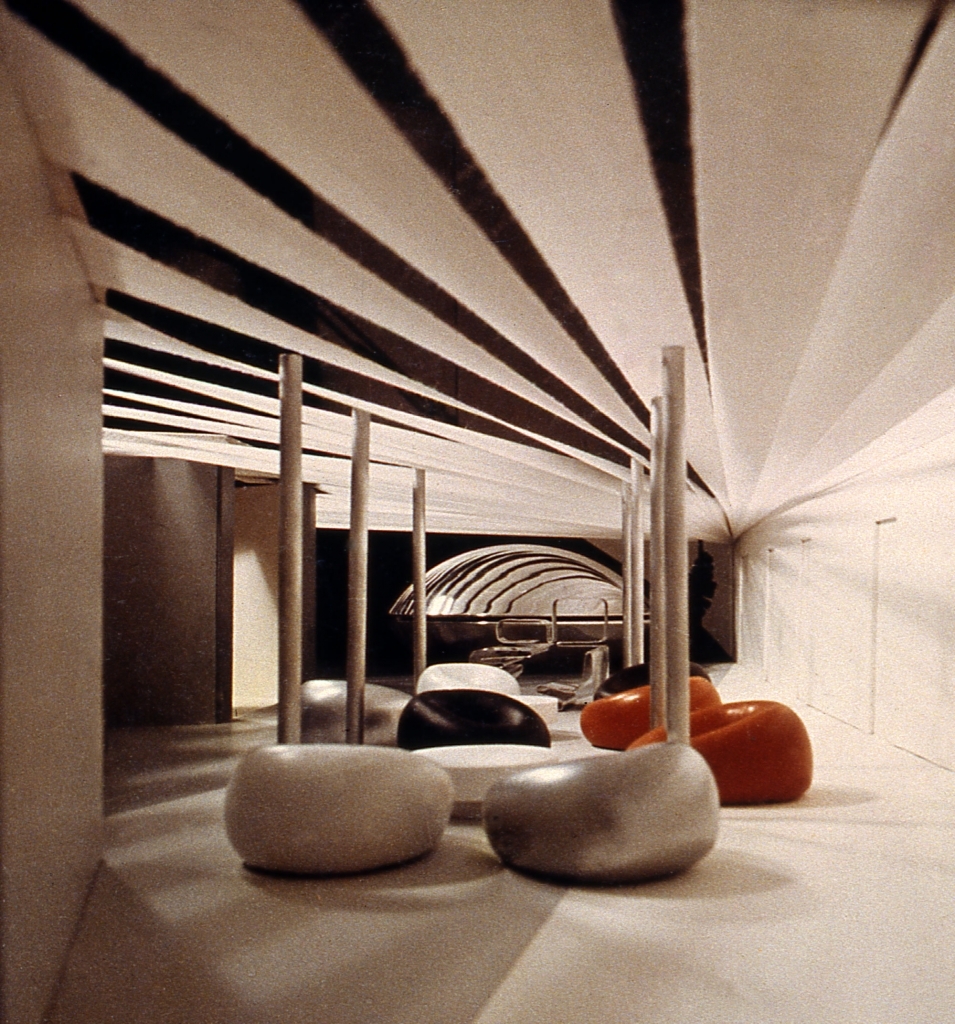
Henceforth, the inflatable, takes the form of furniture, dwellings, structures. The plastic polymers became more common and opened an extraordinary blossoming of creations, of forms and of colours. Furniture by Bernard Quentin, A.J.S. Aérolande, Quasar, De Pas, Urbino and Lomazzi, would accompany the pop art imagery and that of a “lucidity” of decorations and uses.

The ecological debate would soon take hold of the subject, for if at that time we were not yet wary of plastic and of other derivatives of petrol, inflatable architecture on the contrary appeared to be an “architecture of the air “, removing itself from the definitive and irreversible entry into time and space, escaping foundations and heavy materials. In England for example, the artist Graham Stevens worked on giving an ecological dimension to the use of pneumatic structures.

It also acquired a critical and political function. The ephemeral nature of the inflatable does indeed give it an intemporal dimension, that of the event, of the action, of participation. It is the instrument of an intervention, which did not escape artists such as those of the Gruppo N, or Piero Manzoni, Yves Klein, Hans Haacke, Otto Piene, Marinus Boezem, Lars Englund, Andy Warhol… and the architects who would make it the instrument of an alternative criticism like UFO, Utopia or the creators of the Viennese radical scene. Harbingers of the contestation which rumbled amongst the young generation, the inflatables act as a prism for viewing the world which surrounds us in another way (like the Urboeffimeri of UFO) and in order to live together differently (Instant City, Ibiza, 1971). The inflatable is thus used by the group A.J.S. Aérolande, made up of Jean Aubert, Jean-Paul Jungmannand Antoine Stinco, to call into question the competition the prix de Rome just before May ‘68 and to propose a new way of building, modular, festive and endlessly transformable.

After the petrol crisis at the end of the 1970’s which would sound the death knell of an ideology of the use of plastics, the inflatable progressively faded away, the post-modern current jeopardising the image of this industrial product. But since about ten years, with the appearance of more ecological new technologies, the inflatable has regained its reputation and represents an alternative for a number of architects (Diller Scofidio + Renfro, Nicholas Grimshaw, Arata Isozaki, Herzog & de Meuron, Snøhetta…). The inflatable enables the reinvention of spatial possibilities, introducing different perceptive and cognitive experiences. The recent appearance of organic textiles allows us to foresee the development of research where the inflatable could offer new architectural and design options and introduce new constructive principles, which the experiences of Achim Menges, amid.cero9, Kengo Kuma, Mad Architects Zero, Selgascano demonstrate…
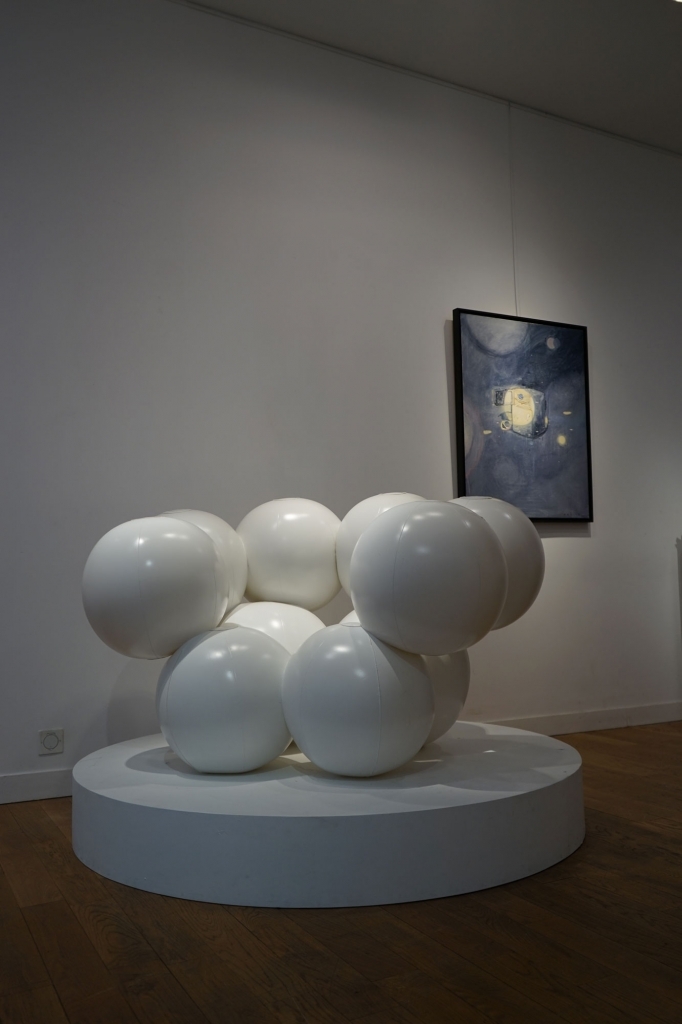
Moleculaire-BernardQuentin-expo-GalerieLoft

Bernard Quentin’s story about inflatable furniture

Bernard Quentin’s research on pneumatic structures led him to become the first designer to design fully inflatable seats without structures in the early 1960s. He began to develop from 1966 the principle of “Molecul’Air”, inflatable structures made up with the agglomeration of spheres in the manner of a grouping of atoms.

]]>
https://preprod.artforall.fr/en/bernard-quentin-at-centre-pompidou-metz/feed/ 0
Interview with Philippe Druillet https://preprod.artforall.fr/en/interview-with-philippe-druillet/ https://preprod.artforall.fr/en/interview-with-philippe-druillet/#respond Fri, 04 Jun 2021 07:51:42 +0000 https://artforall.fr/interview-with-philippe-druillet/

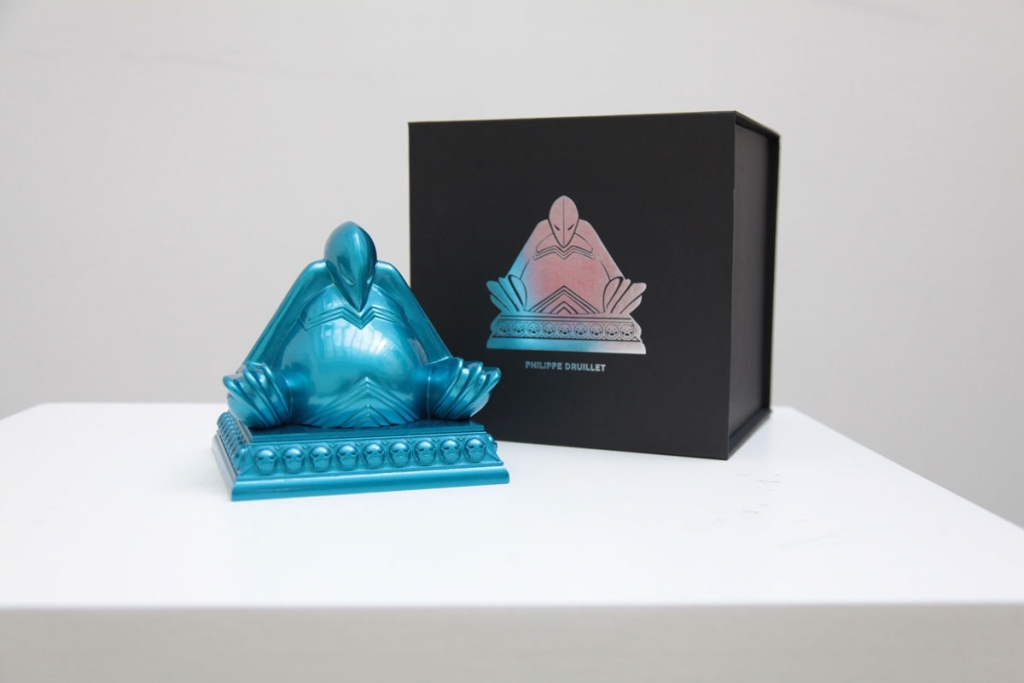
Exclusively for the LOFT Gallery, Philippe Druillet tells us about his love for sculpture and reveals the origin of the pieces he designed as part of the Art for All collection.

Episode I • Itai : Origins
From Vuzz to Daum, back to the origin of the work, Itaï by Philippe Druillet.

Episode II • At the origins of the Dark God…
Born from the imagination of Philippe Druillet, the Dark God is a leading figure in the fantastic universe, at the crossroads between Lovecraft, Michael Moorcock and Lone Sloane.

Episode III • Druillet: Inventor of color
When a Dark God turns electric blue, our beliefs are called into question … unless by reinventing the meaning given to color, we simply manage to challenge our perception of the world and sculpture.

]]>
https://preprod.artforall.fr/en/interview-with-philippe-druillet/feed/ 0
Bertrand Quentin, life is good https://preprod.artforall.fr/en/bertrand-quentin-life-is-good/ https://preprod.artforall.fr/en/bertrand-quentin-life-is-good/#respond Fri, 04 Jun 2021 07:53:10 +0000 https://artforall.fr/bertrand-quentin-life-is-good/

In the midst of the buzz of news that we hear from the media and social networks, a star has yet died out in the utmost silence. A formidable star, who still shone with the energy of a child’s heart and the passion of a young man … at over 96 years old.

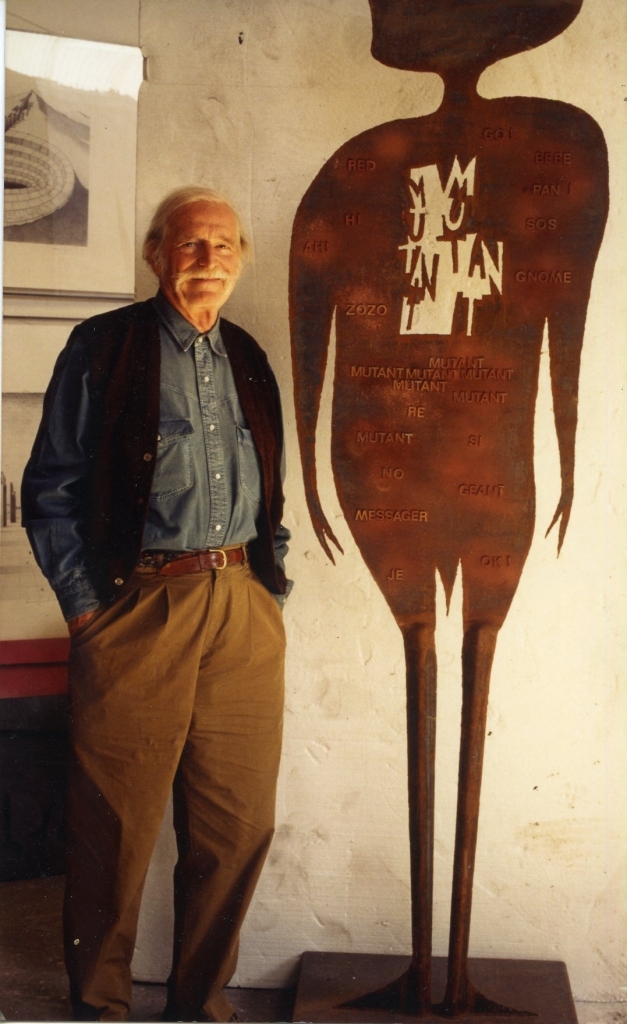
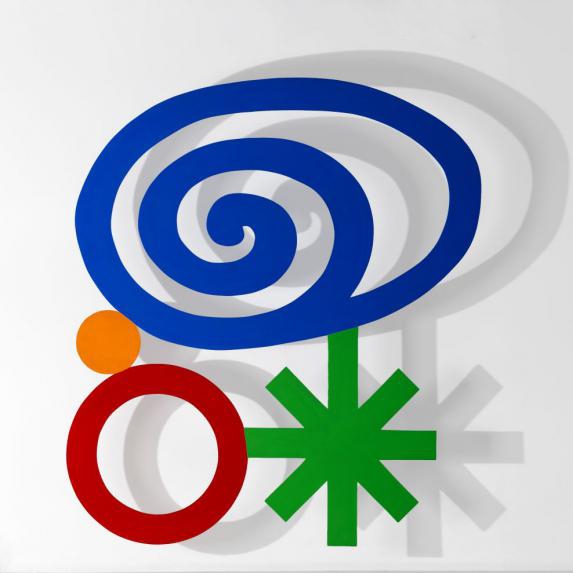
Bernard Quentin was one of the last living contemporary French artists to shake up the 20th century and the art of the 1950s and 1970s. Friend of Picasso, Boris Vian, Jean-Paul Sartre, Maurice Merleau-Ponty, Anne-Marie Cazalis and Juliette Gréco whose life he shared at the end of the 1940s, he participated in numerous exhibitions at the Galerie Maeght alongside Joan Miró , Alberto Giacometti, Calder and Tàpies and works with Le Corbusier then Restany before traveling the world in search of the different forms of language that have forged the history of our world. He thus became a real driving force behind Semiotic art and, through his research, enriched various areas of automatic writing to the point that Salvador Dalí considered him a true “pioneer of cybernetic art and electronic writing”.

Exposition universelle New York World's Fair 1964-1965, État-Unis

Cette volonté de parvenir à établir une forme d’« universalisme » du langage par le biais de l’art prouve combien Bernard Quentin aimait la vie et les hommes, et qu’il a été tout au long de sa vie « un phare vers l’universalité post-moderne de demain » (Pierre Restany). Sa présence et son sourire nous manquerons, mais son œuvre et son parcours parlent d’eux-mêmes. Ils ont su fasciner depuis des décennies de grands collectionneurs ou artistes, dont l’acteur Gérard Depardieu, tombé amoureux de son travail sur le tournage du film Olé réalisé par la femme de l’artiste, la scénariste et réalisatrice Florence Quentin, qui commanditait depuis lors de nombreuses pièces à l’artiste pour sa résidence.

Nous tenions également à saluer le fils de l’artiste, Alexis Quentin, pour le travail formidable qu’il fournit au quotidien afin de faire vivre l’œuvre de cet artiste exceptionnel, grande figure de l’art du XXe siècle, dont la portée considérable de l’œuvre reste encore à découvrir.

Sculpture "Je pense, je parle, j'écris, je chante, je construis, j'aime, je ris", Bernard Quentin
]]>
https://preprod.artforall.fr/en/bertrand-quentin-life-is-good/feed/ 0