Notice: Function _load_textdomain_just_in_time was called incorrectly. Translation loading for the acf domain was triggered too early. This is usually an indicator for some code in the plugin or theme running too early. Translations should be loaded at the init action or later. Please see Debugging in WordPress for more information. (This message was added in version 6.7.0.) in /home/artforall/preprod.artforall.fr/releases/8/wp-includes/functions.php on line 6260

Warning: Cannot modify header information - headers already sent by (output started at /home/artforall/preprod.artforall.fr/releases/8/wp-includes/functions.php:6260) in /home/artforall/preprod.artforall.fr/releases/8/wp-content/plugins/wp-super-cache/wp-cache-phase2.php on line 1563

Notice: Function _load_textdomain_just_in_time was called incorrectly. Translation loading for the woocommerce domain was triggered too early. This is usually an indicator for some code in the plugin or theme running too early. Translations should be loaded at the init action or later. Please see Debugging in WordPress for more information. (This message was added in version 6.7.0.) in /home/artforall/preprod.artforall.fr/releases/8/wp-includes/functions.php on line 6260

Notice: Function _load_textdomain_just_in_time was called incorrectly. Translation loading for the ti-woocommerce-wishlist domain was triggered too early. This is usually an indicator for some code in the plugin or theme running too early. Translations should be loaded at the init action or later. Please see Debugging in WordPress for more information. (This message was added in version 6.7.0.) in /home/artforall/preprod.artforall.fr/releases/8/wp-includes/functions.php on line 6260

Notice: Function _load_textdomain_just_in_time was called incorrectly. Translation loading for the qwery domain was triggered too early. This is usually an indicator for some code in the plugin or theme running too early. Translations should be loaded at the init action or later. Please see Debugging in WordPress for more information. (This message was added in version 6.7.0.) in /home/artforall/preprod.artforall.fr/releases/8/wp-includes/functions.php on line 6260

Warning: Cannot modify header information - headers already sent by (output started at /home/artforall/preprod.artforall.fr/releases/8/wp-includes/functions.php:6260) in /home/artforall/preprod.artforall.fr/releases/8/wp-includes/feed-rss2.php on line 8
Artists – Art For All https://preprod.artforall.fr/en/ Une œuvre d’Art accessible à tous Tue, 25 Jun 2024 10:13:02 +0000 en-US hourly 1 https://wordpress.org/?v=7.1 https://preprod.artforall.fr/wp-content/uploads/2021/05/cropped-afa_picto_work-120x120.png Artists – Art For All https://preprod.artforall.fr/en/ 32 32 Sébastien Kito https://preprod.artforall.fr/en/artist/sebastien-kito/ Thu, 15 Feb 2024 17:01:50 +0000 https://artforall.fr/artist/sebastien-kito/

The sculptor Sébastien Kito lives and works in Paris. Born to a French mother, and raised in France, Sébastien Kito showed a desire to explore the culture of his other country, Japan, and conceived an original thought based on this confrontation of his dual origins.

Sébastien Kito first follows in the footsteps of his father Akira Kito, who was one of the most important Japanese artists in Paris after 1945, and of his grandfather and great-grandfather, by studying painting. He was admitted in 1985 to the Ecole Nationale Supérieure des Beaux-Arts in Paris.

Hoping to rediscover the spirit of the Cobra group in which his father had participated in the 1950s, he attended Pierre Alechinsky’s workshop. At the same time, he worked for New Realist artists, notably Raymond Hains, whose assistant he became in 1983. Despite a heavy family heritage and prestigious teachers, Sébastien Kito quickly found his own way, enriched by all these fruitful meetings.

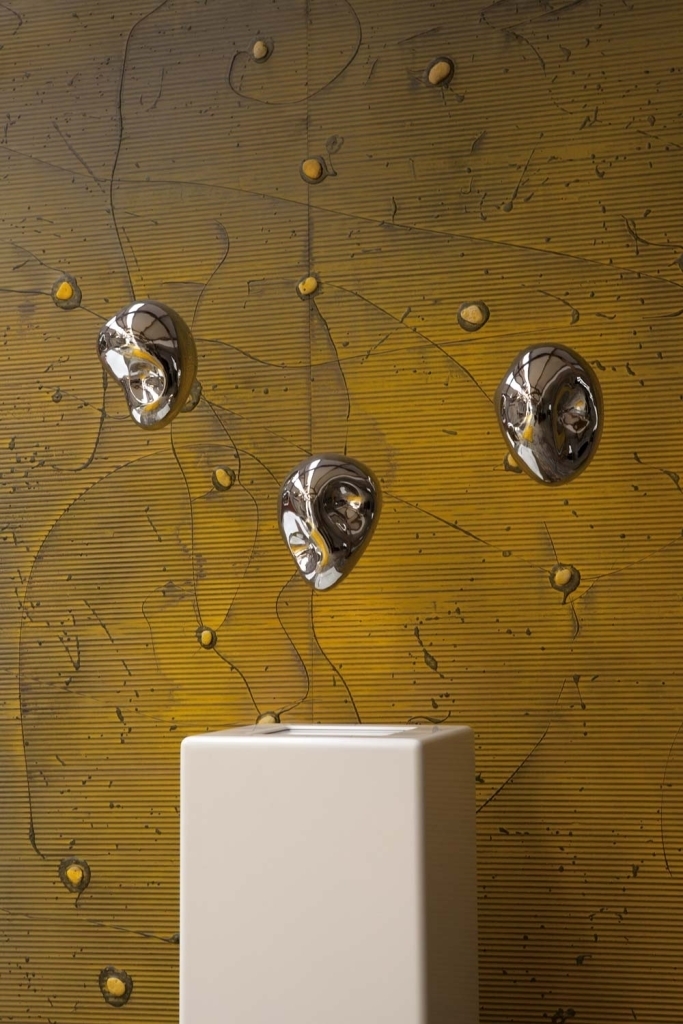
Sébastien Kito, Famille polychrome, 2004, Verre feuilleté et inox, H. 267 cm
Sébastien Kito, Famille polychrome, 2004, Laminated glass and stainless steel, H. 267 cm

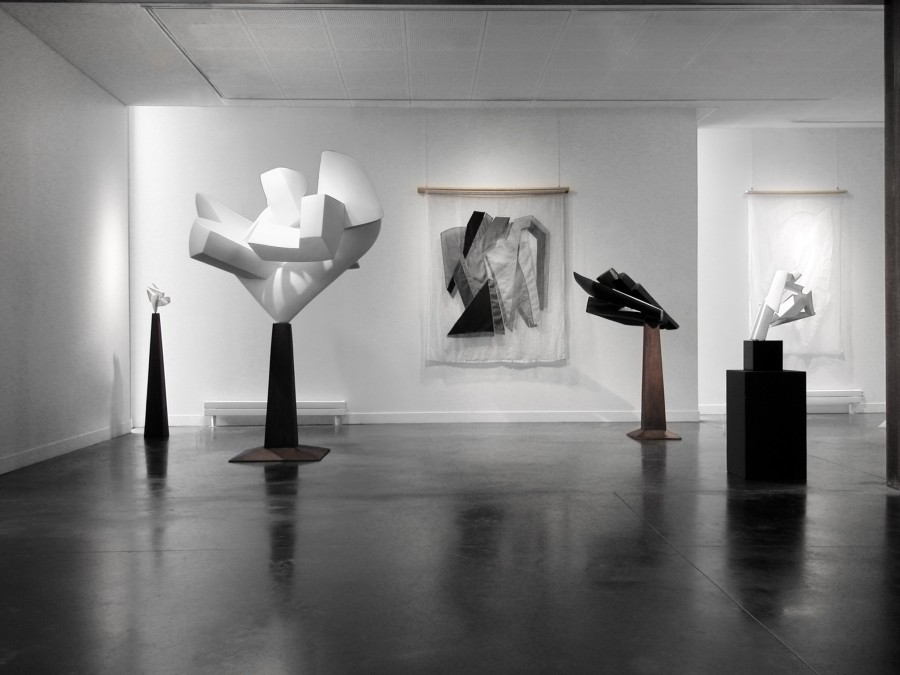
He focuses primarily on the creation of mobile screens hollowed out in their centers, and paintings on cut and articulated supports. This last term is a basis for his thinking and serves as a basis for a second major stage, the design of giant hinges called Extragonds.

Sébastien Kito is currently pursuing an interrogation of form and color through mobile, articulated and hollowed-out sculptures, often carrying anthropomorphic or animal reminiscences. His sculptures provide a playful invitation to join the space occupied by the work or to transform it by moving one of the pieces of the evolving structure.

These particular relationships between the work and space are similar to the Japanese concept of ma, which designates the spatial or temporal interval between two things, as important as the two elements which limit it. It is with the greatest apparent simplicity that Sébastien Kito manages to suggest complex relationships or interactions between sculptures and space, between fullness and emptiness.

Sébastien Kito, Fluctuat Nec Mergitur, 2019, inox et verre feuilleté, H. 44 x 42 x 42 cm.
Sébastien Kito, Fluctuat Nec Mergitur, 2019, stainless steel and laminated glass, H. 44 x 42 x 42 cm.
]]>
Quentin Garel https://preprod.artforall.fr/en/artist/quentin-garel/ Wed, 22 Feb 2023 11:14:02 +0000 https://artforall.fr/artist/quentin-garel/

Son of the sculptor Philippe Garel, Quentin Garel was born in Paris in 1975. Graduated from the National School of Fine Arts in Paris in 1998, he was resident at Casa Velasquez from 1998 to 2000.

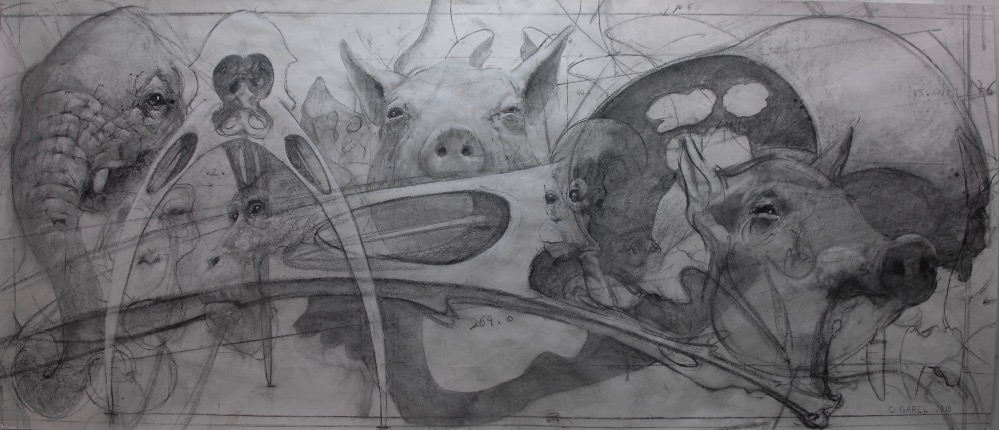
His work of sculpture, in bronze, iron, wood or porcelain, is characterized by the creation of a bestiary, sometimes very realistic, sometimes reduced to the state of a skeleton. Garel explains: “Over the past few years, I have developed a sculptural practice that implements various wood assemblies around the theme of the trophy; a prideful custom of man that I try to divert into the benefit of food animals by denouncing the ridiculous nature of this practice. I extended this theme through cast iron, which gives it a more monumental dimension and opens it outwards. Such a piece can, for example, use the garden as a base, giving the feeling that it partially crosses the surface of the earth, like the vestige of an emerging past”.
An excellent draughtsman, Garel works on the subjects of his sculptures beforehand on paper and completes each of his sculpture exhibitions with a series of sketches and preparatory studies.

Bosferatu, Quentin Garel, 2015, 170 x 110 x 90 cm.
Fontaine du jardin des géants, Lille, 2009

Since the commission in 2009 of a series of sculptures for the new Jardin des Plantes in Lille, Garel has extended his bestiary to animals from the savannah and the jungle. The municipality commissioned him to create a series of trophies constituting a fountain, the Allée des Têtes Cracheuses, with the idea of creating a sort of baroque Noah’s Ark, playful and generous. The preparatory studies (sculptures and drawings) of these animals have been the subject of his recent exhibitions (Paris, Rouen, Epinal, Bologna, Milan): giraffes, hippos, turtles, frogs, crocodiles, chimpanzees, ostriches. are now part of his bestiary.

However, Garel did not forget his first centre of interest and continued his work on the skeleton, with the production of skulls of sheep or killer whales, or even bird skulls (albatross, flamingo, etc.) , while at the same time responding to new public or private commissions (Haute-Normandie Région, Tour Carpe Diem by Aviva at La Défense) and developing a career in the United States (New York, Houston).

Exhibition « Anomal », Domaine de Chamarande, 2020, France
]]>
Parvine Curie https://preprod.artforall.fr/en/artist/parvine-curie/ Tue, 07 Dec 2021 17:04:46 +0000 https://artforall.fr/artist/parvine-curie/

Parvine Curie was born in Nancy in 1936, of Franco-Iranian origin. After obtaining her baccalaureate she began linguistic studies and left to discover England, Austria, Spain and Italy. In 1957, she discovered Catalan art and decided to settle in Barcelona where her first sculptures were born. She lives with the Catalan sculptor Marcel Marti with whom she had a son, David Marti in 1959. In 1960, she presented her first solo exhibition at the French Institute of Barcelona. In 1965 her work was stylized and constructed, notably through the practice of iron, bronze, cut aluminum and embossed metal in the following year. The “Gales” Fashion store in Barcelona asks her to decorate their windows for Christmas: Fantastic birds, Angels-sirens.

Mère Poblet, ParvineCurie

In May 1968 she made her first Mère (Mother), which she presented at Suzanne de Cönninck’s at the Center for the Integration of the Arts. She left Spain in 1969 to settle in Paris. In 1970, Parvine Curie occupied a studio in the Cité internationale des arts in Paris. At the Salon de la Jeune Sculpture in the Luxembourg Gardens, she presents Première Mère, an assembly of glued planks painted in black and enhanced with brass. This work was noticed by the sculptor François Stahly, who recognized in a great affinity with his work at the time. Stahly and his wife Claude invite her to work with them at the collective workshop in Crestet, in the Vaucluse and then in Meudon. This is where Parvine Curie learns the basics of the trade, wood and stone carving. Stahly, for his part, recognizes Parvine’s structuring influence on his work.

In 1973, after the death of Claude Stahly, Parvine Curie moved for six months with François Stahly at Albany in the United States. The landscapes of the rocky mountains and the discovery of pre-Columbian civilizations strongly influence her work. She travels to Mexico, Guatemala, Morocco, India, Egypt, Yugoslavia and Greece.

After her divorce with Marcel Marti, she married Stahly and back in France, she received her first public commissions (1st placed at the Pierre-Bégon college in Blois. The work, Mère Anatolica, placed in the courtyard of the Pierre-de-Coubertin, in Chevreuse where Pierre Huyghe studied in 1975. This hieratic sculpture will partly be at the origin of the sculptor’s career). In 1976 the Monnaie de Paris published small reliefs, sculptures and her jewelry, in limited editions.

Mère-Anatolica, Retrospective dedicated to Pierre Huyghe at the Center Pompidou, Paris.

In 1979, she received the Bourdelle Prize (jury made up of the sculptors Penalba, Waldberg, Hajdu, Etienne-Martin and Couturier) and, in 1980, a two-meter version of the Mother-Cathedral work, in exotic wood, was purchased by the city of Paris for the inauguration of the Museum of Contemporary Outdoor Sculpture, quai Saint-Bernard.

In 1984 she presented a retrospective at the Museum of Modern Art in Troyes and the city of Meudon commissioned a Monument to the victims of Nazi barbarism, made in Carrara marble. In 1988, the Élysée bought her the sculpture Mère-Couloirs in aluminum, a presidential gift to german chancellor Helmut Kohl and two years later a non-commercial edition of twenty-five small pyramids, which President Mitterand would offer to heads of state during the Franco-African summit in La Baule. She presents a retrospective of her works at the Jean Arp Foundation (Clamart, Hauts-de-Seine), at the Jacques-Prévert Center, (Aulnay-sous-Bois, Seine-Saint-Denis) in 1994, at the Orangerie of the castle of Meudon (Hauts-de-Seine) the following year and the Gothic monastery of Pebralbes and the Maeght gallery in Barcelona in 1999.

Exhibition at the Meudon Art Center

In 2000 she exhibited her works alongside of François Stahly at the French Institute in Barcelona (Spain). In 2003 she exhibited at the Art Center of Meudon and devoted her time to François Stahly whose health deteriorates who died in 2006. The following year it was her son, David Marti, painter and poet who extinguished in turn. She organized a Retrospective for him presented at the Cadaqués museum in 2009.

In 2012 she presented a new retrospective at the Collegiate Church of St Martin in Angers with musical interventions as well as poetic itineraries on texts and poems by David Marti. The following year in 2013, she was decorated Chevalier des Arts et des Lettres (elevated to the rank of Officer in 2021) and participated in the exhibition “Les Femmes Sculpteurs (Women Sculptors)” at the Villa Datris (Isle-sur-Sorgue). In 2015, she participated in the exhibition “Dessine-moi une collection” at the Museum of Modern Art in Troyes and created the Parvine Curie – David Marti donation fund.

"Mère-Matmata 1975-1977", Exhibition "They make abstraction" at the Center Georges Pompidou in 2021.

In 2017 she published a monograph on the occasion of her retrospective “Parvine Curie, Sculptures & Tangkas” presented at the CAMPREDON ART Center in L’Isle ‑ sur ‑ Sorgue (E. Maison de l’Europe) and the following year she participates in the exhibition Les Pionnières – In the workshops of women artists of the 20th century at the Galerie Pierre-Alain Challier and publishes a Monograph at Somogy Editions d’Art with the Galerie Martel Greiner. In 2021, she is also in the spotlight at the Center Georges Pompidou (Paris) in the exhibition They make abstraction.

Video

The Sheltered Child by Parvine Curie

Discover in the video the artist Parvine Curie and the message of this work.

Play Video
]]>
Kriki https://preprod.artforall.fr/en/artist/kriki/ Tue, 07 Dec 2021 15:33:54 +0000 https://artforall.fr/artist/kriki/

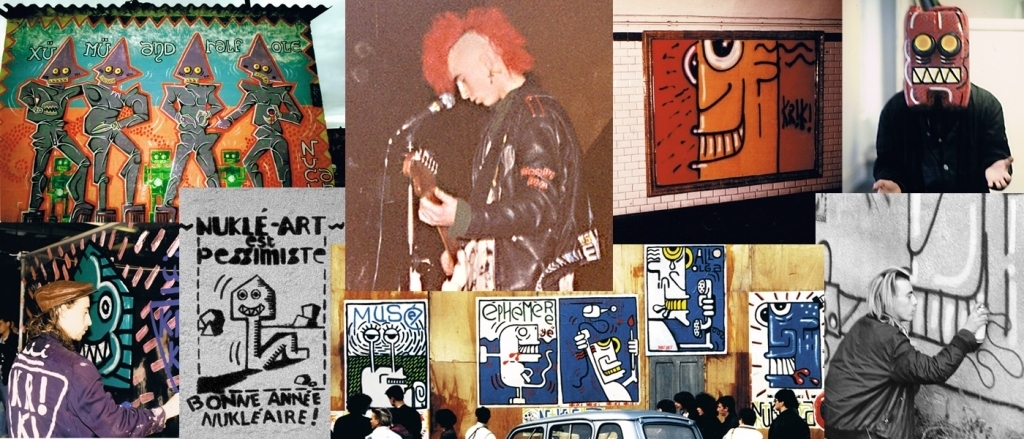
The art critic Jean-Luc Chalumeau, author of numerous works on contemporary art, writes a preface to Kriki’s monograph: “Founder of the group of visual artists Nuklé-Art in 1984, and the electro-punk music group Les Envahisseurs, Kriki still embodies punk culture in contemporary French art. From 1984, the stencil in the street will be his art school, as well as in the subway and his advertising poster hacks. As a result, he participated in the founding and the blossoming of what is known today as Street Art. Immersed in alternative culture, his youthful avant-gardism will immediately place him at the top of the emerging artists to follow both by the art galleries and on the art market.”

Nuklé-Art, Kriki

From his beginnings, Kriki covered the palisades and walls of the capital with the famous stencil “Hello Olga, there is a stencil to erase” (Olga like the degraphitter of the cleaning service of the City of Paris). Immersed in alternative culture, Kriki took part in 1985 in the 2 km of wild frescoes that would revive the industrial wastelands of the Ourcq canal. In 1986, the artist joined forces with Editions Parallèles for the publication of “Pochoirs à la Une”, which has today become the essential reference for the pioneers of stencil and Street Art. That same year, he will participate in the historic sale “Young people arrive” under the hammer of Master Binoche alongside, among others, Keith Haring and Futura 2000. From the outset, Kriki was identified as one of the emblematic figures of the young french painting of the 80s. He participated in the emergence and foundation of Urban Art, long before the art world heard of Banksy. Nevertheless, Kriki belongs to this generational sensibility of the Free Figuration movement, which he contributes to its revitalization. Very soon after his entry “by break-in” into art, as he said, Kriki found himself exhibiting alongside Wim Delvoye, Keith Haring or Basquiat in galleries as famous as Guy Pieters Gallery (Knokke-Le-Zoute), Il Capricorno (Venice) and Enrico Navarra (Paris); or to participate in the very first exhibitions at prestigious Parisian galleries such as Jérôme de Noirmont, Kamel Mennour, or even today Suzanne Tarasiève exhibiting Immendorff and Baselitz…

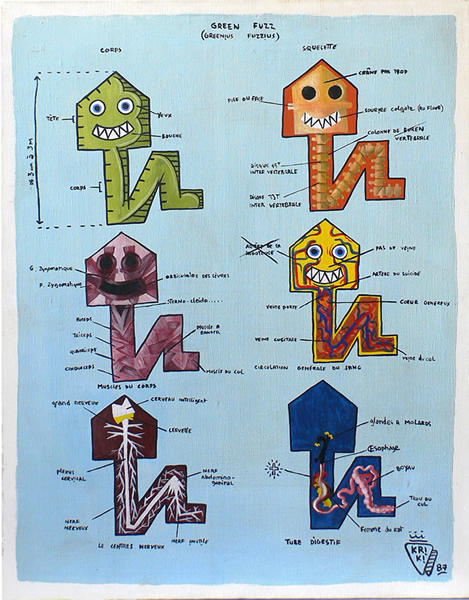
ANATOMY OF GREEN FUZZ, 1987, Acrylic on canvas, 26 x 51 cm

At 23, Kriki, tutelary figure of Urban Art, will already have his first Solo Show at FIAC, immediately imposing a style that is directly identifiable on the international scene, making him becoming one of the major young artists of his generation.

In 1985, Kriki invented a character, the Fuzz, half-robot, half-polymorphous fetish, omnipresent, a real brand which the Museum of Modern Art of the City of Paris produces an edition. This interest in the now iconic Fuzz will be relayed by the Louis Vuitton House which, through continued sponsorship, will allow the realization of a large-scale project on the Fuzz, and presented at the Kamel Mennour Gallery in 2000. After numerous metamorphoses, the Fuzz and the figures which accompany it will reappear in the paintings in the form of viruses contaminating the history of art.

Kriki-LaPunkitude
LA PUNKITUDE, 1989, 130 x 190cm, Acrylic on the cutting canvas.

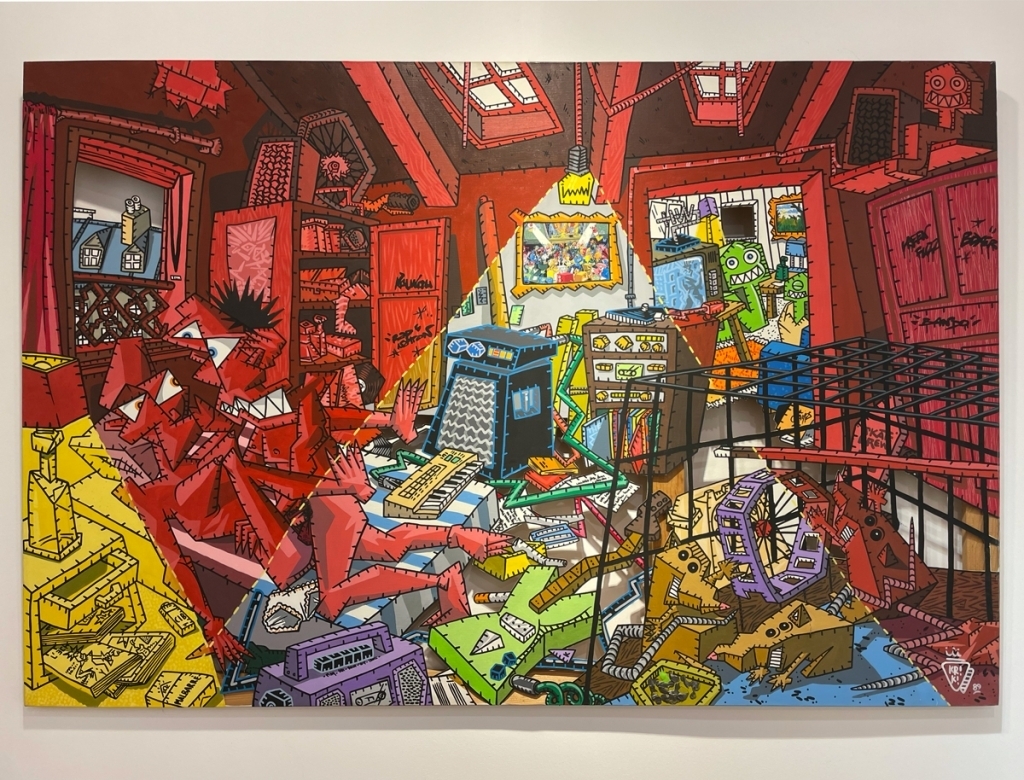
Now more than ever, Kriki’s work reveals worlds constructed by multiple cultural references made from the sedimentation of affects that punctuate his life as an artist. Indeed, Kriki mixes his worlds, not hesitating inside complex architectures to interconnect African masquerade characters with pompadours wearing sneakers, as well as breaker dancers with domestic robots. All of his figures draw their identities from African rites, but also from western classical art, Hip Hop culture, as well as robotics, notably with the android Topo, home automation guard. As a result, this over- manipulation of original images from which his paintings provokes a certain resistance to our first attempt of understanding. Ernest Van Buyender, president of the Museum of Contemporary Art in Antwerp (Muhka), will write “Kriki is the only French artist whose originality and ambition of his painting can be understood as a bridge between Subculture and High culture”. Kriki’s painting is that of hyper-connectivity with jacks and other connection cables which, like so many energy flows, network his visionary worlds where his own aesthetic language meets an universal language.

Video

Who is Fuzz ?

Meet with Kriki in his studio to discover the true story of Fuzz.

Play Video
]]>
Richard Texier https://preprod.artforall.fr/en/artist/richard-texier/ Wed, 17 Nov 2021 17:29:24 +0000 https://artforall.fr/artist/richard-texier/

Richard Texier is a painter and sculptor born in Niort in 1955. After having set up his nomadic studio across the world (New York, Moscow, France, Shanghai, Rangoon), he now lives and works in Paris.
His work is presented in numerous public and private collections in France and abroad.

The National Taiwan Museum, the Luxembourg Museum, the Marine Museum in Paris, the Botanical Museum in Brussels, the Culture Pavilion in Moscow and the Shanghai Museum of Fine Arts have dedicated a personal exhibition to him …

His monumental sculptures are visible in many cities in Shanghai, Duxberry in the United States; La Rochelle, Niort, and Paris in front of the Gare du Nord where Angel Bear stands.

He has published five books with Gallimard, Nager, Le grand M, Zao, the hypothesis of shiny green, Codex and several monographs at Éditions de la Difference (1995, Réed. 1999), at Flammarion (2004) and at Éditions du Patrimoine (2011).

Two lines of research structure his current work:

  • The theme of hybridization which he translates into creations of mythical animals, Angel Bear, Mimesis, Unicorna…. bionic sculptures in bronze, sometimes monumental, smooth and flexible, open, pierced, traversed by a harmonic wave, they capture the unstable, the ephemeral presence in the world. Freed from structural, anatomical or figurative constraints, these fluid and light sculptures border on the immaterial.
  • The theme of elastogenesis, elasticity of the imaginary, of which he publishes the Manifesto in Fata Morgana (2018).

    More recently he produced a series dedicated to Quantum Animals, sculptures exhibited at the Down Town-François Laffanour gallery and brought together in a book signed by Michel Onfray, published by Éditions Gallimard (2021).

Video

ANGEL BEAR of Richer Texier

Discover the artist Richard Texier and the message conveyed by this work.

Play Video about Angel Bear-Texier-GareDuNord
]]>
Antonio Seguí https://preprod.artforall.fr/en/artist/antonio-segui/ Sat, 23 Oct 2021 13:31:06 +0000 https://artforall.fr/artist/antonio-segui/

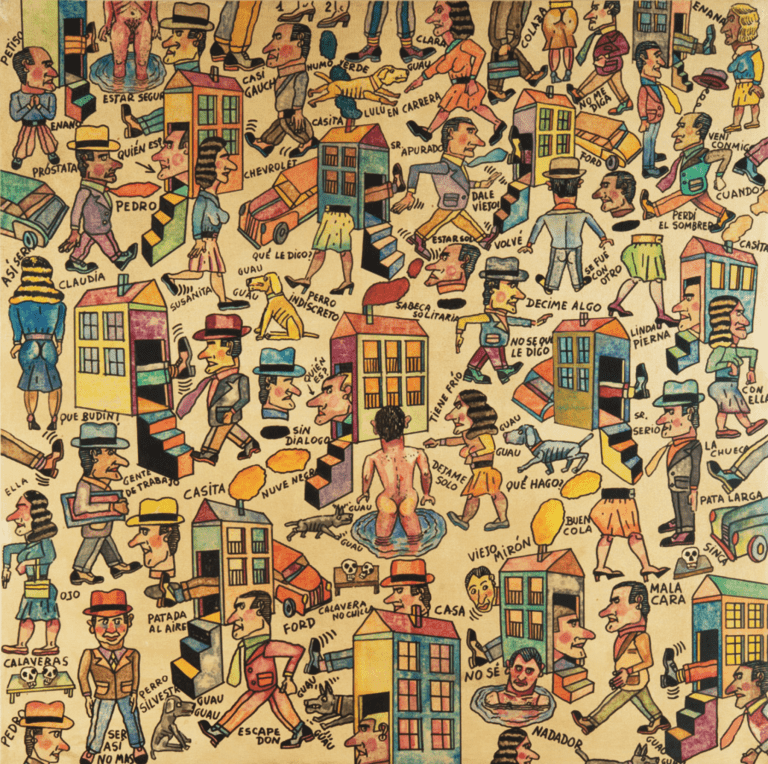
Antonio Seguí is an artist who treats the spectacle of urban life with humor and irony. If each of his works carries with the images of the city, the night and his native country, Argentina, the central theme of his work is above all “Man” and more specifically modern man.

On multiple media, from painting to photography, from lithography to monumental sculpture, he thus depicts a whole gallery of moving characters. In these works, on the fringes of pop art and New Figuration, the realism is essential, but it is a “magical” realism, imbued with the warm colors, the noise and the crowds of the great cities of Latin America. The lines are deliberately simplified, as if to give more freedom to these walking beings, “I can neither paint nor live without this freedom” he would say.

Antonio Seguí, Despierta Confundido, 2016. Acrylic on canvas, 100 x 100 cm.

Seguí is a painter and sculptor born in Córdoba (Argentina) in 1934. In 1951 he went to France to study painting and sculpture. Between 1952 and 1954 he traveled in Europe, in particular, in Spain where he studied, and in Africa where he brought back many objects. Back in Argentina, he presented his first solo exhibition in 1957 before leaving in 1958 on a long journey throughout South America and Central America. He notably settled in Mexico, where he studied printmaking techniques. Then in 1961, he returned to work in Argentina, before moving to Paris in 1963.

Since 1957 Antonio Seguí has ​​been presented in the most prestigious galleries around the world. His works are also featured in more than a hundred museums, notably in Germany, Brazil, Spain, the United States, Japan, Switzerland, and various countries in Latin America. In France, his works are part of important museum collections such as the Center Pompidou and the Museum of Modern Art of the City of Paris, the MAC-VAL of Vitry-sur-Seine, the Museums of Fine Arts of Orléans, Lyon, Tourcoing, or Dôle. He worked and lived in Arcueil, France.

On February 26, 2022 Antonio Seguí died in Buenos Aires at the age of 88.

Video

Antonio SEGUI & The Busy Man

Discover the artist and the message conveyed by this work.

Play Video
]]>
Yazid Oulab https://preprod.artforall.fr/en/artist/yazid-oulab/ Tue, 12 Oct 2021 16:28:17 +0000 https://artforall.fr/artist/yazid-oulab/

Yazid Oulab was born in 1958 near Constantine in Algeria. Son of a mechanic and French teacher, he is also the nephew of writer Kateb Yacine.

As a teenager he often went to his uncle’s where he discovered the effervescence and intellectual dynamism of artistic circles. At 22, he decided to study art and did everything he could to be accepted at the National school of Fine Arts in Algiers. He spent nearly 6 years there before leaving for Marseille in 1988 to join the Lumigny Art School. He also worked in construction sites to pay for his studies, particularly in masonry, where he learned gestures and techniques valuable to his artistic practice.

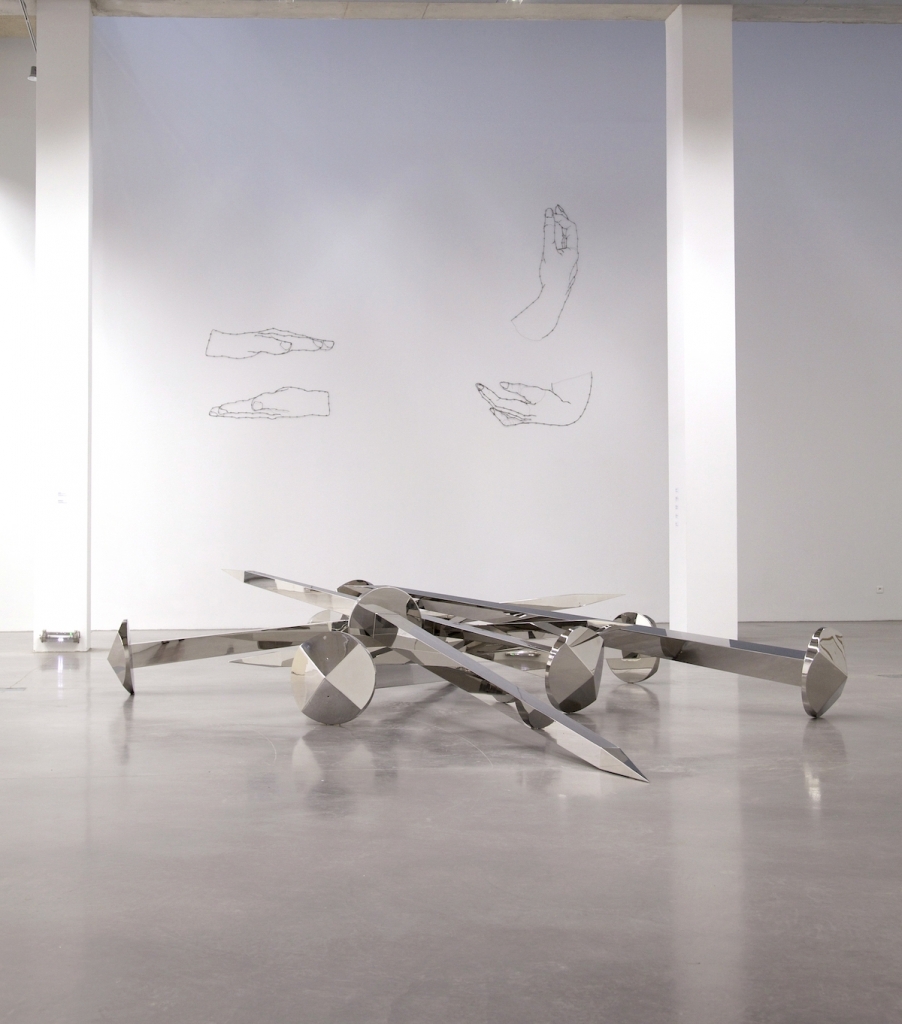
Expo Yazid frac Paca ensemble clous
Yazid OULAB, Alif, 2012, set of 8 nails L. 350 cm, Limited edition of 8 + 4 E.A., exhibition Yazid Oulab, FRAC P.A.C.A, 2013
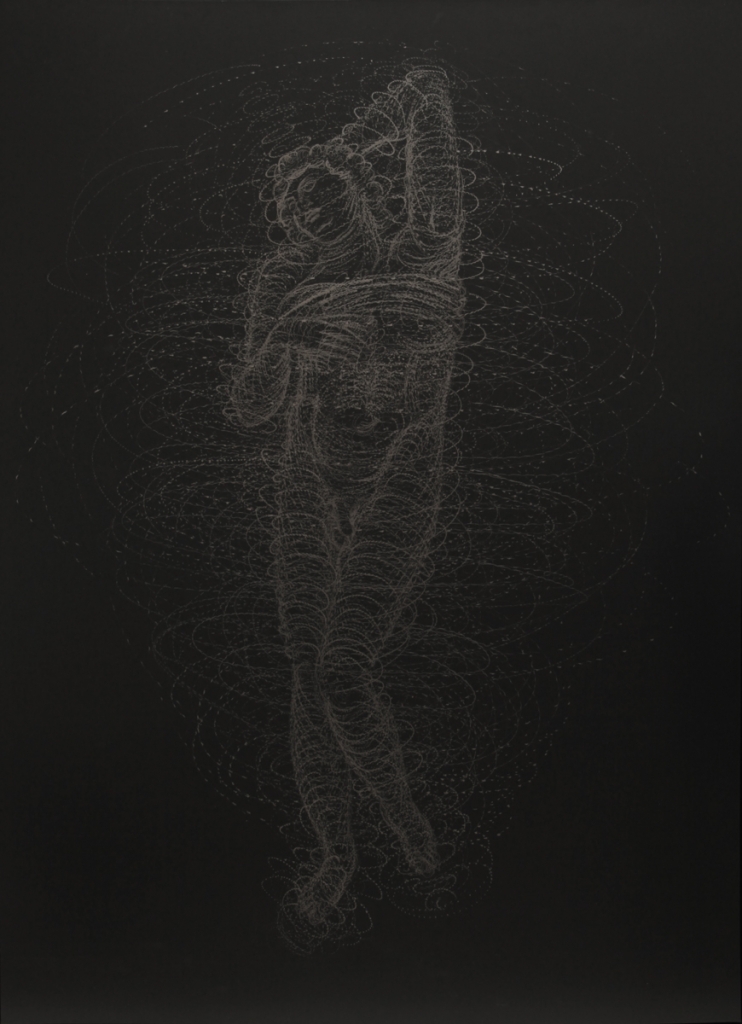
MICHEL-ANGE'S DYING SLAVE, graphite with a drill on canvas, 2013, 207x154.3cm

In 2008 he participated in the exhibition Les Traces du Sacré, at the National Museum of Modern Art, Center Pompidou and was an artist in residence at the Calder studio from February to July 2009. He was selected this year to inaugurate the new building of the FRAC PACA on the occasion of Marseille European Capital of Culture 2013.

Yazid Oulab is a multi-facetted artist and a man with an old soul. His practice seems to be informed by centuries of rich and diverse civilizations. He is an interpreter and a messenger capable of analyzing and translating into simplified objects millennia of cultural, social and spiritual history.

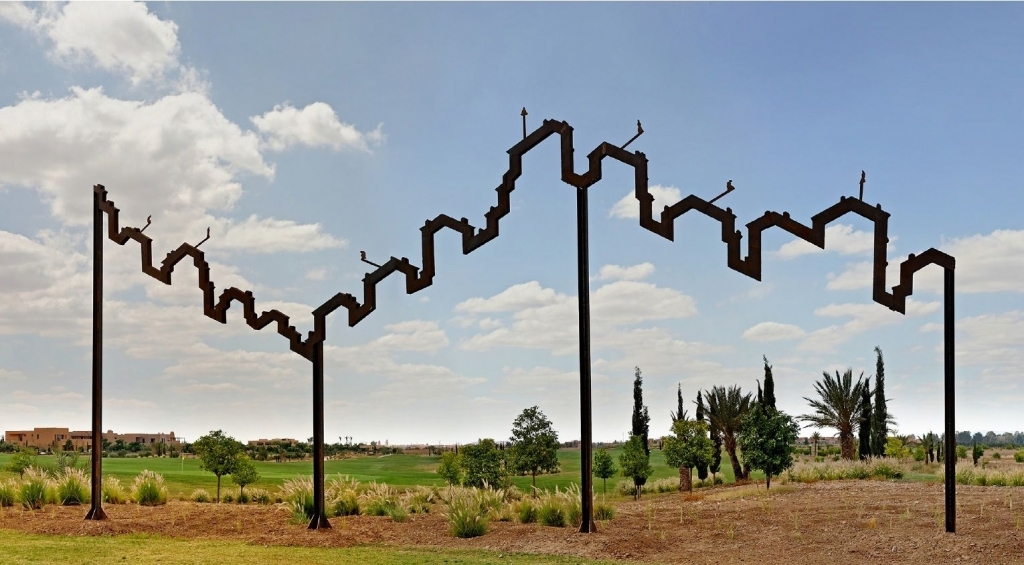
Yazid OULAB, Urban Mountain, 2012, Corten Steel, H. 5 m x W. 12 m, Al Maaden Golf Resort (Morocco).

Yazid Oulab is a craftsman in love with gesture, a fascinated and fascinating poet for whom the gaze generated the meaning, a tireless and potentially omniscient witness. He is the accomplished artist,  a man who, far from the excesses of today’s society, would be ready to sacrifice his newly gained fame of art.

His works – objects, installations, sculptures and videos – represent tools of expression and communication that encourage us to consider the plurality of our times and measure the historical influence of all things.

Yazid Oulab is much more than an artist, he is a storyteller. He is a guide and a philosopher and he helps us discover or rediscover the origins of writing, numbers, spirituality, religions or Nations. Yazid Oulab is an artist or a frontier who creates connections, as the nail does; the nail is a recurrent element in his work.

Video

ÂLIF BY YAZID OULAB

Discover in the video the various symbolisms of this nail.

Play Video about Yazid Oulab
]]>
Claude Gilli https://preprod.artforall.fr/en/artist/claude-gilli/ Tue, 06 Jul 2021 13:29:04 +0000 https://artforall.fr/artist/claude-gilli/

Claude Gilli is a leading artist from the Nice school who has greatly contributed to the affirmation of French pop art. Born in Nice in 1938, he entered the Decorative Art school in Nice in 1955. Between 1957 and 1959, during his first exhibitions at the Galerie de Longchamp, he befriended with Albert Chubac, Martial Raysse, then Ben at the inauguration of the latter’s “Laboratory 32”.

In 1962, on New Year’s Eve, he burned almost all of his early works. Then he met Arman, César, Farhi and Venet before meeting Robert Malaval with whom he carried out several works around “L’aliment blanc”. He presents numerous exhibitions, notably in Venice then in Paris at Yvon Lambert Gallery after having obtained the Lefranc Prize in 1966. The following year he takes part in the exhibition “12 Super-Réalistes” in Venice at Del Leone where he discovers the works of American “pop”, Lichtenstein, Warhol and Wesselmann. Then in 1968 he worked with plexiglass before starting a series of “snail” paintings.

PEINTURES, 1977, Pièce Unique, Bois peint, H. 192cm
PAINTINGS, 1977, Unique Piece, Painted wood, H. 192cm
Forêt d’Arbres (Forest of trees), Corten Steel, H. 350 x W. 850 x D. 320 cm, March 2012, Al-Maaden Golf Resort (Morocco)

En 2005, Constance Ryder réalise un documentaire long-métrage sur son travail diffusé sur TV5 Monde.
Entre 2005 et 2015, Gilli participe à de nombreuses expositions en Asie, aux États-Unis et en Europe, réalise une sculpture monumentale en acier de 12 mètres pour la Fondation Alliance, sur le site d’Al-Maaden à Marrakech, et est décoré par le ministre de la Culture au grade de Commandeur des Arts et Lettres.

Le 28 juin 2015 Claude Gilli décède à Nice, à l’âge de 76 ans. Une exposition posthume lui est consacrée au MAMAC en 2017.

Claude Giili's solo show at the Loft Gallery, 2018
]]>
Philippe Huart https://preprod.artforall.fr/en/artist/philippe-huart/ Tue, 06 Jul 2021 10:46:17 +0000 https://artforall.fr/artist/philippe-huart/

Philippe Huart was born in 1953 in Clamart (France). After studying at the Superior School of Modern Arts in Paris, he became an illustrator and graphic designer for literary and phonographic editions.
In 1991 he decided to devote himself to painting and then participated in numerous exhibitions, individual or collective in France and abroad. He was inspired by the effects of advertising, marketing and consumption. His painting is based on the concept of “objective reality”.

Ecoute la douce voix, 2020, Oil on canvas, 60x60cm
Philippe Huart Solo Show at Loft Gallery, 2019

Pictorial perception is above all “visual”. It is linked to forms and rhythms. The works of Philippe Huart are not only everyday objects, but a “symbol”. These symbols, trivialized by their accumulation and frequency within our environment, of which only the juxtaposition and the superposition of their enlarged fragments would allow us to perceive them from a new angle, both surprising and familiar.

See-No-Evil_2007-huile-sur-toile-130x97cm, Philippe Huart
See No Evil, 2007, Oil on canvas, 130x97cm, Philippe Huart
]]>
Bernard Quentin https://preprod.artforall.fr/en/artist/bernard-quentin/ Fri, 02 Jul 2021 15:21:04 +0000 https://artforall.fr/artist/bernard-quentin/

«Bernard Quentin, a semiotic art, a lightshouse
towards the post-modern universality of tomorrow » 

Pierre Restany

Bernarnd Quentins was born in 1923. He arrive Paris around 1950 for study the painting, sculpture and the architecture at the National Superior university of Decorative Art and the National Superior University of Fine Art. Between 1942 and 1944,  he was actively involved in the Resistance within the “Maniple” network, and in 1945, while regularly frequented a house of the french thought (Maison de la Pensée Française), he became a friends with Pablo Picasso.

This meeting and his discovery of Guernica will notably influence the abstract and expressionist writing of the unique book on the theme of the horrors of war and the death camps that he exhibited at Under-thirty fair that year, before resume his classes at the National superior University of Fine Arts which had been stopped by the war. He established himself in the artistic milieu of the Saint-Germain-des-Prés district and frequented existentialist and surrealist group, the painters Wols and Camille Bryen as well as the theoretician of letterism Isidore Isou. He is also member of the band in Boris Vian with Jean-Paul Sartre, Maurice Merleau-Ponty, Anne-Marie Cazalis and Juliette Gréco with whom he then lived in a room under the roof of rue Servandoni.

He exhibited his first ideograms-writings in 1945 on the Gay-Lussac street and presented his first solo exhibition at the House of University in Paris, which have to move the next year to Zurich, Geneva and Bern. In Switzerland he discovered poetic primitivism as well as oriental and African influences in the several writing of Paul Klee. Fascinated by the cuneiform and the egyptian hieroglyphics, the scandinavian runes or rock inscriptions, he then moved away from abstract expressionism to create new ideograms and focused his approach on the question of letters and signs.

After meeting Aimé Maeght(Art dealer) in Cannes in 1947, he then took part in exhibitions with the group Dazzled hands which brought together Joan Miró, Alberto Giacometti, Jean Signovert, Alexander Calder and Antoni Tàpies, and became friends with Pierre Dmitrienko , François Arnal and Serge Rezvani. His first research on the sources of language had led him to travel, particularly in the South of France, in Italy before leaving for the Nordic countries and crisscrossing Scandinavia and Lapland. Back in Europe, he revisit to Switzerland, Germany and Italy where he discovered the futuristic works of monumental automatic writing.

In 1951, he studied  the establishment with Le Corbusier in Sainte-Baume whiche is a city of artists. The artists could build themselves by drawing inspiration from the animal kingdom and collaborated on various architectural works intended at integrating poetry and color in the monumental scriptural environment, especially with mosaics, stained glass windows, tapestries and green spaces participating in urban polychromy. In 1954, he took to the road again and traveled to South America (Brazil and Peru), West Africa (making Fresco in Niamey and Bamako), and several capitals of Eastern Europe (Warsaw, Moscow, Prague) before returning to Paris where he exhibited at Galerie Stadler, Galerie Craven and the Iris Clert’s house.

In 1957, his homage to Monet presented simultaneously at André Schoeller’s  house and at the Galerie Saint-Germain made Pierre Restany say: “This is the moment when Quentin’s writing reaches its maximum dilution in cosmic space: Air, Water, Light.”.  These years were notably marked by a gradual abandonment of tiny signs for an wider, more structured and gestural writing.

The 1960s marked a turning point. Words become the subject of the painting from which they will soon emancipate themselves. Bernard Quentin then moved to Milan where he became friends with Fontana, who profess spatialism, art was expanded and freed from the restriction of painting. He found Yves Klein, Spoerri, Arman and carried out his first research with Olivetti’s oscilloscopes and computers.

As a pioneering artist, he used the Bic pen in automatic writing and experimented with electronic writing. He estimate that the tools of visual communication would soon give an autograph in edge of painting and propelling it in the eyes of Salvador Dalí in real “the pioneer of cybernetic art and electronic writing”.

In 1968, in an excerpt from the special program devoted to different forms of “avant-garde” expression (broadcast on the ORTF and entitled “16 millions of youth”) when the journalist asked Bernard Quentin if he abandoned classical painting and sculpture, the artist’s response is ambiguous:

“Yes. I think painting is over, classical sculpture, that is say to bronze, marble or plaster is completely finished, it no longer corresponds to any means of expression of the 20th century. it perhaps corresponded to the vision of the world that we could have in the Renaissance and in the 19th century, when we thought that man was at the center of the universe and that the artist could, in his studio, look at his navel and distribute masterpieces for a small elite. The artist’s vision has already changed, it is no longer an individual vision that the artist sees himself at the center of the world. I think the artist has to go into the factory and try, through his world view, to maybe modify or create things on an industrial scale.”

His plastic research beyond the classical forms of painting and sculpture of the early 1960s coincided with his new passion for air and pneumatic sculpture. So he produced totemic statues and especially his first inflatable sculptures (the Cybules, the Venus of Chicago) which, called upon to monumental interventions in landscapes, will be seen as predictor Land Art.

In 1963, he exhibited a pulsating inflatable sculpture – Cybule III – to a programmed breathing  at the World’s Fair in New York City, and make a friendship withe Liechtenstein and Warhol. He also became the first designer to make 100% inflatable seats (in particular his crescent chair created for french department Printemps) which were presented in 1963 by the Iris Clert gallery in Paris during an exhibition with futuristic ambition (the show of the year 2014). He returned to Italy to produce other metal structures in welded PVC which he exhibited in 1966 at the “Ball Room” of the Waldorf Astoria at the Central park in New York City, Paris, at the studio of Gunther Sachs in Neuilly and at the Blow-Up in Milan. And  he produced parts in series for sale in the United States and Japan, by the Adamoli group in Milan in 1966.

My sculptures can simulate the life because I can manage suitably through some programming to make them evolve,  breathe, throb, and shudder. I can even get them to change their mood if I want. They can have their own regulation. (…) Since I can’t represent reality as I see it, I am trying precisely, in the second degree by palpitations, tremors, to figure out reality by all this tactile side, all the intimate rhythms, the great cosmic rhythms themselves, and the whole mystery of biology ”(interview for“ the avant-garde) in 1968.

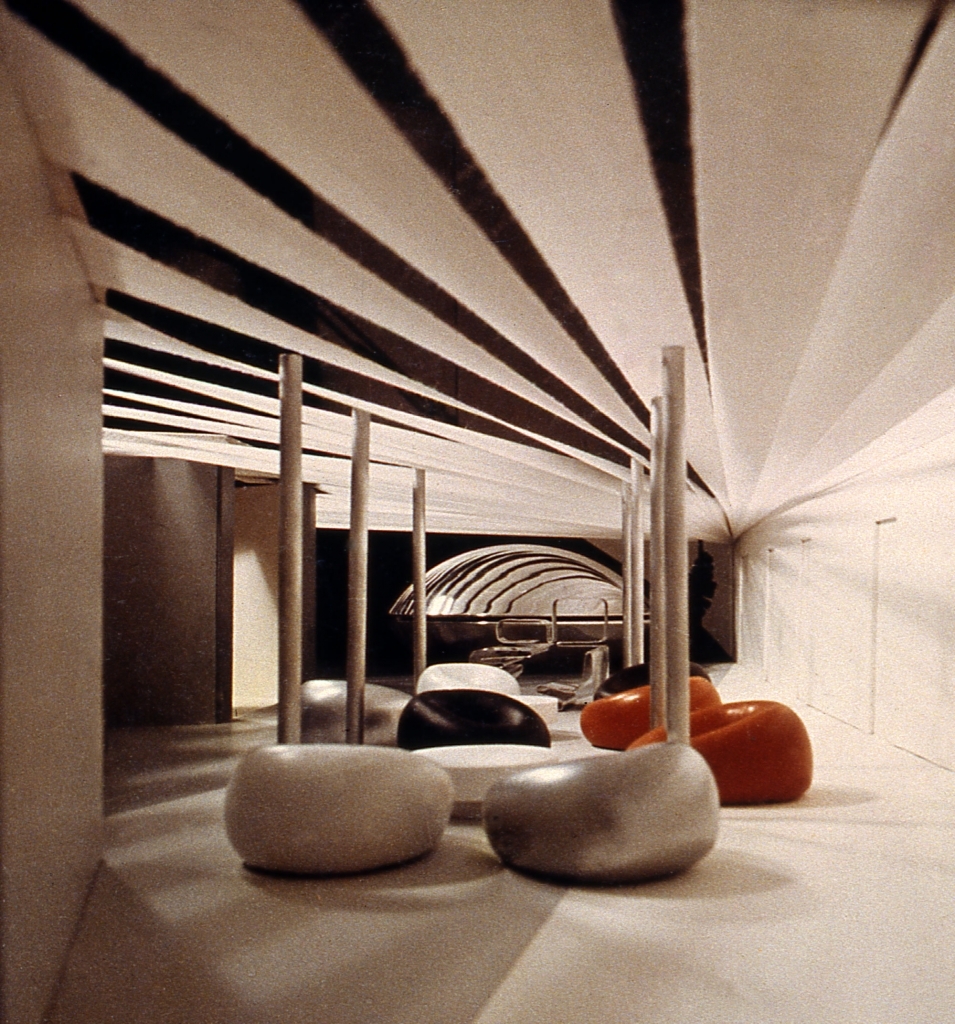
Bernard Quentin, Inflatable Furniture, Universal Exhibition New York World's Fair 1964-1965, Flushing Meadows-Corona Park, Queens, New York (United States).
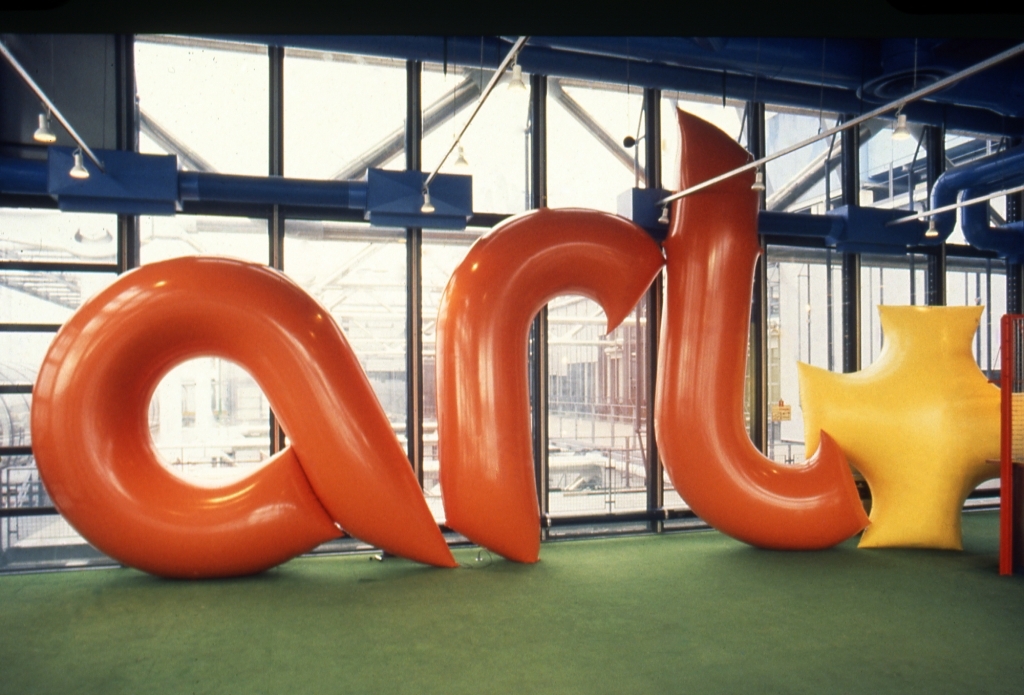
Bernard Quentin, ART, 1975, PVC de couleur, H.5M, Collection du Musée National d'art Moderne, Centre Georges Pompidou
Bernard Quentin, ART, 1975, colored PVC, H.5M, Collection of the National Museum of Modern Art, Centre Georges Pompidou

In 1997, He created le collection L’ART+ which aime to extend art in monumental integration to the environment with Jesus Rafael Soto, Jean Messagier, Jean-Pierre Raynaud, Pierre Restany and Serge Rezvani which commit for finalty to extend art in monumental integrations to the environment. He developed his “art  language ” (project BABEL 62 renamed “QuentinBabelweb” in 1998), a language based on universal graphic signs, understandable by all.

“It needed to find a universal language and invent the understandable symbols  by all. But the meaning of the symbols may differ from one continent to another. This is why I imposed symbols that can be used by everyone. This is the universal side. I based on Kufic and Zen calligraphy, where each artist adds something, in addition to the meaning”

With Bernard Quentin, the color of the signs situates them grammatically: blue for nouns, green for adjectives, red for verbs, orange for articles and pronouns. His writing system, thought to unite men, is strong with three thousand signs that can say anything, tell everything. Graffiti, stenography, hieroglyphics, pictograms, optical fibers, electronic letters form a veritable “semiotic art”.

"All the men on the planet", Bernard Quentin, 2003
Video

Portrait of Bernard Quentin

Discover all his pneumatic projects.

Play Video
]]>